 EN

Introduction: Is a Panoramic Padel Court a Worthwhile Investment?
Investing in a sports facility involves more than purchasing equipment. For investors planning to enter the growing padel market, a Panoramic Padel Court offers opportunities to attract club members, organize tournaments, and develop premium sports venues. However, the real challenge is balancing initial construction costs with long-term booking revenue and operating expenses. According to the International Padel Federation (FIP) World Padel Report 2026, there are now more than 40 million active padel players worldwide and over 91,200 courts, representing 20.4% annual court growth. This expansion creates opportunities, but successful investors still need to evaluate local demand, site conditions, construction specifications, and the expected return on a panoramic padel court investment before placing an order.
What Is a Panoramic Padel Court? Understanding the Investment
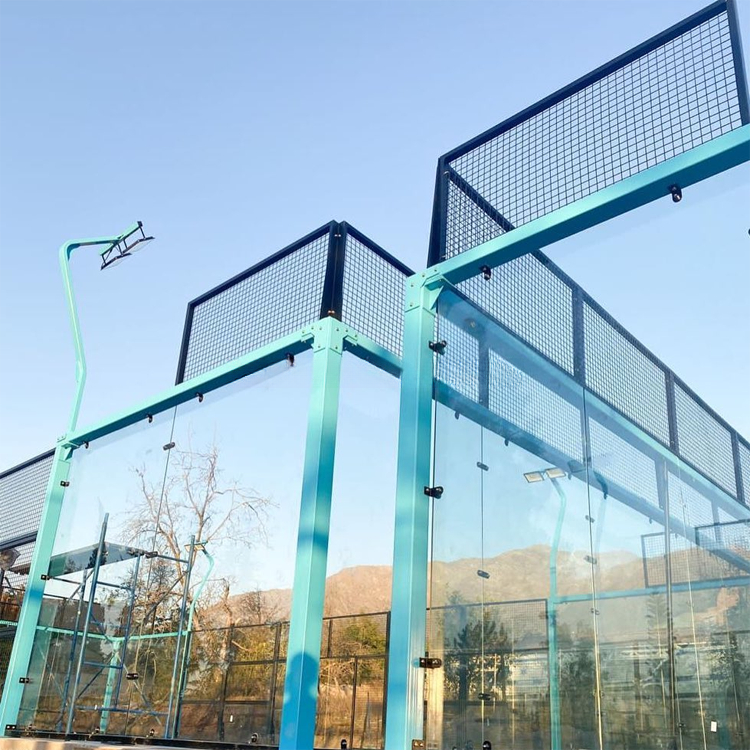
A Panoramic Padel Court is an enclosed padel playing facility featuring large tempered glass panels and a specially engineered steel framework. Its design reduces visible structural obstructions, providing better viewing angles for spectators, coaches, and cameras.
The standard playing area measures 20 meters long and 10 meters wide, following internationally recognized padel court dimensions.
Before purchasing, investors should understand several important industry terms:
-
CAPEX (Capital Expenditure): The initial investment required for purchasing the court, preparing the site, constructing foundations, installing lighting, and completing the facility.
-
OPEX (Operating Expenditure): Recurring expenses such as staff salaries, electricity, cleaning, maintenance, insurance, and booking platform fees.
-
Court Utilization Rate: The percentage of available playing hours that are actually booked and paid for.
-
ROI (Return on Investment): A financial measure comparing the investment's net return with the total capital invested.
-
Payback Period: The time required for accumulated net cash flow to recover the initial investment.
-
Turnkey Solution: A project delivery arrangement covering multiple stages, potentially including design, manufacturing, transportation, installation, and commissioning.
Investors should also distinguish between different court configurations:
Standard Panoramic Padel Court: Uses large glass panels to improve visibility while retaining certain structural support elements.
360-Degree Super Panoramic Padel Court: Uses a specialized structural arrangement to minimize visible vertical posts and create more continuous glass viewing areas.
Classic Padel Court: Uses a more conventional steel support structure and is generally worth considering when initial investment cost is a primary concern.
The right option depends on the target customer group, venue positioning, available budget, and expected commercial use.
What Factors Should Investors Evaluate Before Buying a Panoramic Padel Court?
1. Local Market Demand and Customer Potential
A growing international market does not automatically mean that every new padel facility will attract enough customers.
The FIP World Padel Report 2026 identifies more than 91,200 courts across 191 countries and independent territories. The number of registered players has also reached approximately 1.11 million, increasing by 30.5% compared with the previous report.
These figures indicate industry expansion, but investors should examine demand at the city and neighborhood levels.
Important questions include:
-
How many existing padel clubs operate within the target area?
-
Are nearby courts fully booked during evenings and weekends?
-
What hourly rental prices do competing facilities charge?
-
Is there sufficient demand for coaching, tournaments, and membership programs?
-
Are local customers interested in premium panoramic courts or more affordable recreational facilities?
A practical market assessment should compare competitor prices, booking availability, customer demographics, and expected peak-hour demand.
Investors can also conduct pre-launch surveys, organize trial events, and collect membership registrations before committing to full construction.
2. Initial Investment and Construction Budget
The purchase price of the court is only one part of the total project investment.
A complete budget should include the following components:
| Cost Category | Main Expenses |
|---|---|
| Court Structure | Steel framework, tempered glass, mesh panels, connecting hardware |
| Playing Surface | Artificial turf, infill sand, installation materials |
| Lighting System | LED floodlights, electrical wiring, control systems |
| Foundation Work | Concrete ring beam, ground preparation, drainage |
| Roofing System | Steel canopy, tensile membrane, supporting foundations |
| Transportation | International freight, packaging, customs clearance |
| Installation | Labor, lifting equipment, assembly, commissioning |
| Project Development | Engineering, permits, consultants, insurance |
| Initial Operation | Staff recruitment, marketing, booking software, working capital |
Investors should request a detailed panoramic padel court cost breakdown instead of comparing quotations based only on the price of the court structure.
Industry cost reference:
The Lawn Tennis Association (LTA) provides indicative padel construction costs for Great Britain based on 2025 delivered project estimates.
| Number of Courts | Courts with Lighting | Foundation, Base and Drainage | Estimated Total |
|---|---|---|---|
| 1 | £36,000 | £35,000 | £71,000 |
| 2 | £70,000 | £78,000 | £148,000 |
| 3 | £100,000 | £110,000 | £210,000 |
| 4 | £128,000 | £140,000 | £268,000 |
The LTA also estimates separate canopy and canopy-foundation costs of approximately £75,000 for one court and £220,000 for four courts.
These are UK project benchmarks, not universal supplier quotations. Actual costs depend on site conditions, structural specifications, local labor rates, taxes, transportation, and project scope.
The figures also demonstrate why investors should calculate the complete development budget before selecting a manufacturer.
3. Expected Revenue and Court Utilization
A panoramic court generates its primary revenue through hourly bookings. However, the actual earning potential depends on how frequently the court is occupied.
Consider the following illustrative financial scenario for one court:
-
Operating hours: 14 hours per day
-
Operating days: 30 days per month
-
Total available booking hours: 420 hours
-
Average hourly rental price: £40
The estimated monthly court rental revenue would be:
| Utilization Rate | Monthly Booked Hours | Monthly Gross Revenue |
|---|---|---|
| 30% | 126 | £5,040 |
| 40% | 168 | £6,720 |
| 60% | 252 | £10,080 |
| 80% | 336 | £13,440 |
These figures are illustrative assumptions, not industry-average occupancy or rental prices. Actual results depend on the local market, opening hours, seasonal demand, and pricing strategy.
Investors should also consider additional revenue opportunities:
-
Membership subscriptions and prepaid booking packages.
-
Private coaching and group training.
-
Local leagues and competitive tournaments.
-
Racket and ball rentals.
-
Sports equipment sales.
-
Sponsorship and advertising.
-
Food and beverage services.
A diversified revenue model can reduce reliance on hourly court rentals alone.
4. Investment Payback Period and Break-Even Analysis
A court that generates revenue is not necessarily a profitable investment. Investors need to understand the relationship between booking revenue, operating expenses, and initial capital expenditure.
A basic break-even utilization formula is:
Break-Even Utilization Rate = Monthly Fixed Operating Costs ÷ (Monthly Available Hours × Net Contribution per Booked Hour)
For example, assume:
-
Monthly fixed operating costs: £4,000
-
Available booking hours: 420
-
Hourly booking price: £40
-
Variable cost per booked hour: £5
The net contribution per booked hour is £35.
The break-even utilization rate is:
£4,000 ÷ (420 × £35) = 27.2%
Under these assumptions, approximately 115 booked hours per month would cover the stated operating expenses.
This calculation excludes financing costs, taxes, depreciation, and the recovery of the original investment. Those items must be included in a complete financial forecast.
Investors should also calculate:
Payback Period = Initial Project Investment ÷ Annual Net Operating Cash Flow
For a reliable forecast, prepare conservative, moderate, and optimistic scenarios using different utilization rates and rental prices.
Avoid calculating payback using gross booking revenue alone.
Which Panoramic Padel Court Specifications Should Investors Check?
The structural configuration directly affects installation requirements, player safety, maintenance, and long-term project costs.
1. Tempered Glass Specifications
Glass panels are among the most important components of a panoramic court.
According to LTA construction guidance:
-
Outdoor courts generally use 12 mm toughened glass.
-
Indoor courts may use 10 mm toughened glass.
-
Glass panels should comply with applicable safety standards.
-
Fixing systems should avoid creating irregular ball rebound surfaces.
Investors should request glass specifications, safety certification, panel dimensions, impact-related test documentation, and fixing details.
A lower glass price should not be the deciding factor if the supplier cannot provide appropriate technical documentation.
2. Steel Structure and Corrosion Protection
The steel framework supports the glass enclosure and transfers structural loads to the foundations.
Important specifications include:
-
Steel grade and section dimensions.
-
Tube wall thickness.
-
Welding and connection quality.
-
Hot-dip galvanizing specifications.
-
Corrosion protection for fasteners and connecting components.
-
Structural calculations for local wind conditions.
For coastal locations or humid climates, corrosion protection deserves particular attention.
Investors should ask manufacturers to specify the galvanizing process and coating requirements rather than accepting descriptions such as anti-rust steel without supporting information.
3. Artificial Turf and Playing Performance
Artificial turf affects ball rebound, player movement, traction, and maintenance requirements.
Investors should evaluate:
-
Turf fiber material and construction.
-
Pile height and density.
-
Sand infill specifications.
-
Drainage performance.
-
Wear resistance under frequent bookings.
-
Replacement and maintenance procedures.
The SAPCA Code of Practice for Padel Court Construction provides technical guidance on court construction, surface performance, and maintenance.
Buyers should request the actual turf product specifications and relevant test results instead of relying on general claims about professional-grade surfaces.
4. Lighting and Visibility
Lighting affects operating hours and the ability to organize evening matches and competitions.
The LTA's construction guidance specifies the following ground-level illumination benchmarks:
| Venue Type | Average Illumination | Uniformity |
|---|---|---|
| Regional Competition and Recreational Use | 300 lux | 0.5 |
| National and International Competition | 500 lux | 0.7 |
For television broadcasting, the FIP Beyond Rulebook specifies a minimum vertical illumination level of 1,000 lux.
These requirements measure different lighting conditions and should not be treated as interchangeable.
Investors should request lighting calculations, installation layouts, measured lux levels, and glare assessments before approving the system.
Where Are Panoramic Padel Courts Suitable for Investment?
The commercial potential of a panoramic court depends heavily on the type of facility and its target customers.
1. Commercial Padel Clubs
Dedicated padel clubs are among the most direct applications.
Revenue can come from hourly bookings, memberships, coaching, and tournaments. Investors can also develop multiple courts to accommodate different customer groups and increase booking capacity.
2. Hotels and Resorts
Hotels and resorts can integrate panoramic courts into their sports and leisure facilities.
The open glass design allows visitors to watch matches while supporting premium recreational experiences. These projects may also generate revenue through paid sessions, private events, and guest activity packages.
3. Sports Centers and Fitness Complexes
Existing sports facilities can add padel courts to diversify their services.
This approach may allow investors to use existing parking, reception areas, changing rooms, and customer networks, potentially reducing some development costs.
4. Commercial and Residential Developments
Shopping complexes, residential communities, and mixed-use developments can install panoramic courts as recreational amenities.
In these projects, the financial return may come from direct bookings, membership fees, increased property attractiveness, or additional customer traffic rather than court rental alone.
5. Tournament and Event Venues
A 360-degree super panoramic court can be considered for competition venues where spectator visibility, camera positioning, and sponsor branding are important.
However, investors should confirm tournament requirements before purchasing. Not every panoramic model automatically qualifies for every level of competition.
What Are the Main Advantages of Investing in a Panoramic Padel Court?
When the project is supported by sufficient local demand and a realistic operating plan, panoramic court construction can provide several commercial advantages.
-
Better Spectator Visibility: Large glass panels and reduced structural obstructions support viewing from multiple angles.
-
Premium Facility Positioning: A panoramic design can help differentiate a sports club from conventional recreational venues.
-
Branding Opportunities: Customized glass graphics, logo plates, and colored steel structures support sponsorship and club identity.
-
Flexible Commercial Applications: The same court concept can be adapted for sports clubs, hotels, resorts, and tournament facilities.
-
Additional Revenue Opportunities: Coaching, memberships, events, and equipment rentals can supplement hourly bookings.
-
Scalable Development: Modular court configurations allow investors to plan multi-court facilities and future expansion.
The premium panoramic structure does not automatically generate higher rental prices or occupancy. Its additional investment should be justified by the target market and the venue's commercial positioning.
What Site and Legal Requirements Should Investors Consider?
A technically suitable court can still become a costly project if the site is not properly evaluated.
Before purchasing, investors should check the following:
Site Dimensions: A standard playing area measures 20 × 10 meters. Additional space is required for the enclosure, foundations, circulation, maintenance, and spectator areas.
Ground Conditions: Soil bearing capacity, ground levels, existing structures, and drainage conditions should be assessed before foundation construction.
Wind and Weather Loads: Outdoor steel structures and glass enclosures require engineering calculations based on local wind conditions and applicable building codes.
Planning Permission: Check local zoning, building permits, land-use restrictions, and environmental requirements before ordering the court.
Noise and Lighting Impact: Padel courts can generate noise from ball impacts, player activity, and lighting installations. Residential proximity may require additional assessments.
For example, the LTA's UK guidance indicates that specialist noise and lighting surveys are likely to be required when residential properties are within 50 meters of a proposed court. This is a UK planning consideration, not a universal legal requirement.
Lease and Land Ownership: Investors should confirm that the available land tenure is sufficient to support the construction, operation, and expected investment recovery period.
The safest approach is to complete the site assessment and planning process before committing to a manufacturing order.
How to Choose a Reliable Panoramic Padel Court Manufacturer
Choosing a manufacturer is not simply about comparing product prices. The supplier must be able to provide the structural documentation, material specifications, manufacturing quality, and project support needed for installation.
Investors should evaluate the following factors:
| Evaluation Criteria | Questions to Ask |
|---|---|
| Manufacturing Experience | How many years has the company manufactured sports facilities? |
| Factory Capability | Does the supplier have its own manufacturing facility? |
| Product Specifications | Can it provide glass, steel, turf, and lighting documentation? |
| Engineering Support | Are structural drawings and foundation requirements available? |
| Customization | Can the supplier customize colors, logos, and structural configurations? |
| Quality Control | Are material inspections and finished-product checks documented? |
| Export Experience | Can the supplier handle international packaging and transportation? |
| Installation Support | Are installation instructions and technical assistance available? |
| Warranty | What components are covered, and what exclusions apply? |
| After-Sales Service | Are replacement glass panels, fasteners, and other spare parts available? |
It is also advisable to request at least three comparable quotations based on the same technical specification.
This makes it easier to identify differences in materials, installation scope, warranty coverage, and excluded costs.
Why Consider Shengshi Sports Tech Tianjin Co., Ltd. for Your Padel Court Project?
Shengshi Sports Tech Tianjin Co., Ltd. (SSTD) is a sports equipment manufacturer established in 1998.
According to its company profile, the company operates a manufacturing facility covering more than 24,000 square meters, employs approximately 100 people, and exports sports equipment to 80 countries.
Its product portfolio includes panoramic padel courts, classic padel courts, Padbol courts, squash courts, football cages, and outdoor fitness equipment.
For investors considering a panoramic court project, several product and service aspects are worth evaluating:
-
Manufacturing Capability: In-house production provides a direct channel for discussing structural specifications and customization requirements.
-
Panoramic Court Options: Different configurations can be evaluated according to project positioning and budget.
-
Customized Design: Steel structures, court colors, and branding elements can be discussed for commercial projects.
-
Project Communication: Technical and export teams can assist with product specifications and international order coordination.
-
Product Compliance: The company reports CE and ISO certifications and independent patents. Investors should request the relevant certificate numbers, issuing organizations, validity periods, and applicable product or management-system scopes.
Before placing an order, investors should request a complete quotation, technical drawings, material specifications, warranty conditions, and confirmation of the installation scope.
These documents help establish whether the proposed court configuration matches the project's actual requirements.
Conclusion: Make an Informed Panoramic Padel Court Investment
Buying a panoramic padel court is a capital investment that requires careful consideration of market demand, construction costs, structural specifications, operating expenses, and expected revenue.
The global padel market continues to expand, but investors should focus on local booking demand and realistic financial projections rather than relying solely on industry growth figures.
A well-planned project should have a clearly defined target market, an approved site, a detailed construction budget, documented technical specifications, and a realistic break-even and payback model.
Before purchasing, compare manufacturers based on engineering capabilities, material quality, customization, warranty coverage, and after-sales support.
For investors planning a custom panoramic padel court for commercial sports facilities, Shengshi Sports Tech Tianjin Co., Ltd. can be considered as a manufacturing partner when evaluating court configurations and project-specific requirements. Request a detailed quotation and technical proposal before making the final investment decision.
Frequently Asked Questions About Panoramic Padel Court Investment
1. How Much Does It Cost to Buy and Build a Panoramic Padel Court?
The total cost depends on the court configuration, number of courts, glass specifications, steel structure, lighting, foundations, drainage, transportation, and installation.
As an indicative UK benchmark, the LTA estimates approximately £71,000 for a single outdoor court with lighting, foundation, court base, and drainage. Covered structures and additional project requirements increase the investment.
2. Is a Panoramic Padel Court More Expensive Than a Classic Padel Court?
Generally, a panoramic configuration can involve higher structural and glass-system costs because of its larger glass panels and specialized support arrangements.
However, the actual price difference depends on the manufacturer, structural design, materials, and customization requirements. Investors should compare complete quotations rather than product names alone.
3. How Long Does It Take to Recover the Investment in a Padel Court?
There is no universal payback period.
It depends on the initial project investment, hourly rental prices, booking utilization, operating costs, financing expenses, and additional revenue sources.
Investors should calculate the payback period using annual net operating cash flow rather than gross booking revenue.
4. How Many Padel Courts Should Investors Build Initially?
The number depends on local demand, available land, construction budget, and expected operating capacity.
A single court can be suitable for testing a new market or adding a facility to an existing sports center. Multi-court developments may provide more booking capacity and support tournaments, coaching programs, and membership activities.
However, additional courts should be supported by realistic demand forecasts.
5. What Is the Recommended Glass Thickness for an Outdoor Panoramic Padel Court?
LTA construction guidance specifies 12 mm toughened glass for outdoor padel courts and 10 mm for indoor courts.
Investors should also verify safety certifications, glass fixing methods, structural calculations, and compliance with the standards applicable in their installation market.
6. Can a Panoramic Padel Court Be Installed Under a Canopy?
Yes. Panoramic courts can be combined with steel canopy structures, tensile membrane roofs, and other covered sports facility designs.
Investors should check clear playing height, ventilation, drainage, wind resistance, foundation requirements, and local planning regulations before selecting a roofing system.
7. What Documents Should Investors Request Before Placing an Order?
The essential documents include:
-
Detailed commercial quotation and product specification.
-
Structural drawings and foundation requirements.
-
Glass and steel material documentation.
-
Turf and lighting specifications.
-
Relevant product conformity and quality certificates.
-
Installation instructions and project schedule.
-
Warranty terms and after-sales service conditions.
These documents help investors compare manufacturers, verify technical compliance, and reduce the risk of unexpected project expenses.

Table of Contents
- Introduction: Is a Panoramic Padel Court a Worthwhile Investment?
- What Is a Panoramic Padel Court? Understanding the Investment
- What Factors Should Investors Evaluate Before Buying a Panoramic Padel Court?
- Which Panoramic Padel Court Specifications Should Investors Check?
- Where Are Panoramic Padel Courts Suitable for Investment?
- What Are the Main Advantages of Investing in a Panoramic Padel Court?
- What Site and Legal Requirements Should Investors Consider?
- How to Choose a Reliable Panoramic Padel Court Manufacturer
- Why Consider Shengshi Sports Tech Tianjin Co., Ltd. for Your Padel Court Project?
- Conclusion: Make an Informed Panoramic Padel Court Investment
-
Frequently Asked Questions About Panoramic Padel Court Investment
- 1. How Much Does It Cost to Buy and Build a Panoramic Padel Court?
- 2. Is a Panoramic Padel Court More Expensive Than a Classic Padel Court?
- 3. How Long Does It Take to Recover the Investment in a Padel Court?
- 4. How Many Padel Courts Should Investors Build Initially?
- 5. What Is the Recommended Glass Thickness for an Outdoor Panoramic Padel Court?
- 6. Can a Panoramic Padel Court Be Installed Under a Canopy?
- 7. What Documents Should Investors Request Before Placing an Order?