EN

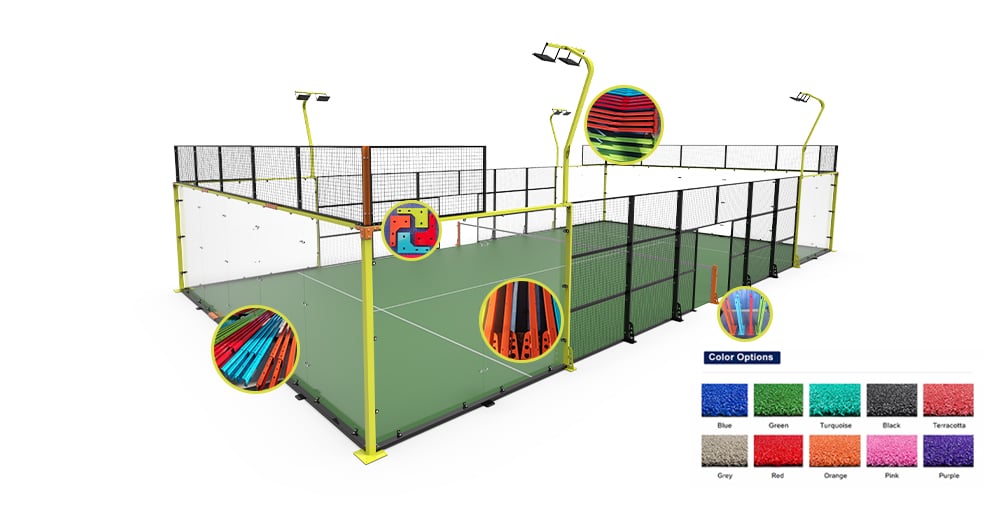
A Panoramic Padel Court improves spectator experience by reducing visual obstructions, creating clearer views of rallies, and making matches easier to follow from different viewing positions. For commercial padel clubs, sports facility developers, and tournament organizers, choosing the right panoramic padel court design for spectators can help create a more engaging venue for live matches, coaching demonstrations, and social events. Unlike traditional court structures with more visible support posts, a full panoramic padel court uses a more open glass enclosure to improve sightlines. When combined with suitable spectator seating, well-planned lighting, and comfortable viewing areas, this design can create a more immersive panoramic padel court spectator experience without compromising structural safety or playing performance.
Why Does a Panoramic Padel Court Create a Better Viewing Experience?
Padel is a fast-paced sport in which players frequently move between the baseline, side walls, and net. Spectators need to follow the ball, understand player positioning, and react to changes during a rally. A court structure that blocks part of the playing area can make this difficult, particularly when viewers sit near corners or watch from an elevated position.
A panoramic design addresses this problem through several practical features.
1. Panoramic Padel Court Design Provides Clearer Sightlines
Traditional padel courts may have visible steel posts around the glass panels. Depending on their position, these posts can interrupt a spectator's view of a player or the ball.
A panoramic padel court reduces these visual interruptions by using larger glass panels and minimizing structural supports in key viewing areas. This is particularly useful when spectators watch fast exchanges near the back glass or along the side walls.
For example, a spectator sitting behind the baseline can follow a defensive lob more easily when structural posts do not cut across the main viewing area. The same principle benefits coaches observing player movement and tournament officials monitoring play.
The exact viewing advantage depends on the court model. A standard panoramic design may retain some structural supports, while a full panoramic configuration generally minimizes them further.
2. A Full Panoramic Padel Court Creates a More Immersive Atmosphere
Large glass panels make the court feel visually open, allowing spectators to see more of the playing area without the enclosure dominating their view.
This open appearance is valuable for premium sports clubs, hotel leisure facilities, private sports centers, and tournament venues. Spectators can feel closer to the action while remaining outside the playing enclosure.
However, the glass design alone does not guarantee an engaging event. The atmosphere also depends on seating arrangements, crowd management, commentary, lighting, and the way the venue organizes matches and social activities.
3. Panoramic Padel Courts Improve Camera Positioning and Live Streaming
For venues that broadcast matches or publish video content, unobstructed sightlines benefit more than the people sitting courtside. They also make it easier to position cameras where structural supports would otherwise interfere with the image.
A broadcast-friendly court layout can support:
- Baseline cameras that capture serves, defensive shots, and lobs.
- Side-view cameras that show movement and positioning during rallies.
- Elevated cameras that provide a wider view of the playing area.
- Coaching videos that make player movement easier to analyze.
- Social media clips that show the action without distracting structural elements.
For commercial clubs, these advantages can make the venue more suitable for tournaments, coaching content, sponsorship presentations, and online promotion. Actual audience growth or engagement improvements should still be measured rather than assumed.
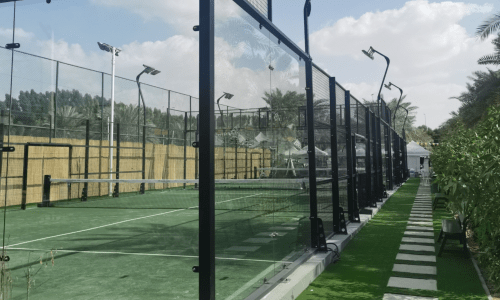
What Should You Prepare When Planning a Spectator-Friendly Panoramic Padel Court?
Before choosing a court model, define how people will use the venue. A facility designed mainly for hourly bookings has different requirements from a club that regularly hosts tournaments, corporate events, and spectators.
1. Identify Your Panoramic Padel Court Audience
Start by identifying your main audience and the activities you expect to host.
- Recreational clubs: Prioritize comfortable viewing areas, easy access, and clear views for friends and family.
- Commercial sports centers: Consider spectator circulation, social spaces, coaching visibility, and the use of premium courts for events.
- Tournament venues: Plan for audience capacity, camera positions, event operations, and the requirements of the relevant competition organizer.
- Hotels and leisure facilities: Consider how the court fits into the wider guest experience, including dining, lounges, and other amenities.
- Training academies: Make sure coaches can observe player positioning, ball trajectories, and movement patterns.
Do not choose a premium full panoramic court simply because it looks impressive. Its value depends on whether improved visibility supports the venue's actual business model.
2. Measure the Space for Panoramic Padel Court Installation
The standard internal playing area of a padel court is 20 m long and 10 m wide. The overall site must also accommodate the enclosure, foundations, access routes, spectator areas, and other facility requirements.
For indoor venues, check the clear ceiling height and identify any beams, ventilation ducts, or lighting equipment that could obstruct the playing area or camera views.
For outdoor facilities, consider prevailing sunlight, rain protection where appropriate, drainage, wind exposure, and the orientation of spectator seating.
A dimensioned site plan should show the court position, entry points, proposed seating areas, circulation routes, accessible viewing locations, and camera positions. This allows the manufacturer, architect, and local contractor to coordinate the layout before construction begins.
3. Prepare a Spectator Experience Checklist
Before requesting a quotation, establish the features that matter most to your venue.
- Panoramic or full panoramic glass configuration.
- Clear viewing angles from the baseline and sidelines.
- Spectator seating capacity and accessible viewing positions.
- Lighting design and glare management.
- Camera and live-streaming requirements.
- Safe circulation routes and emergency exits.
- Cleaning and maintenance access for glass panels.
- Budget for seating, event equipment, and spectator amenities.
This checklist helps prevent a common planning problem: spending most of the budget on the court structure while leaving too little space or money for the people who will watch the matches.
How to Improve Spectator Experience with a Panoramic Padel Court: 7 Steps
Step 1: Choose the Right Panoramic Padel Court Configuration
Start with the viewing experience you want to create. Standard panoramic and full panoramic courts both offer visibility advantages, but their structural arrangements differ.
A standard panoramic court can provide good viewing conditions while retaining some visible support structures. A full panoramic model generally minimizes supports around the main viewing areas, making it particularly suitable for show courts, premium clubs, and televised matches.
When comparing options, ask the manufacturer for technical drawings showing the location of every major support, glass joint, access opening, and structural beam. Review the sightlines from the actual positions where spectators will sit or stand.
Do not remove or reduce structural supports without an engineered design. Large glass panels and open viewing configurations still require appropriate structural rigidity, impact resistance, and anchoring.
Step 2: Design Spectator Seating Around the Panoramic Padel Court
Clear glass does not help much if spectators are positioned where they cannot see the full playing area. Seating layout should therefore be developed alongside the court design rather than added after installation.
For smaller clubs, a limited number of benches along suitable viewing areas may be sufficient. For tournament venues, dedicated seating behind the baseline or along selected sidelines can provide more organized viewing positions.
When planning spectator seating:
- Check the view of both baselines and the central playing area from each seating section.
- Avoid placing columns, advertising boards, equipment cabinets, or railings directly in the main sightlines.
- Consider whether spectators in rear rows can see over people sitting in front.
- Provide wheelchair-accessible viewing positions with appropriate routes and companion seating.
- Keep entrances, exits, and emergency routes clear of chairs and temporary equipment.
- Use a site plan or three-dimensional layout to check viewing angles before fixing the final arrangement.
There is no single seating layout that works for every panoramic padel court. The appropriate arrangement depends on venue capacity, available space, local accessibility rules, and the type of event.
Step 3: Optimize Panoramic Padel Court Glass for Visibility
Glass is central to the spectator experience, but transparency alone is not enough. Reflections, fingerprints, dust, water marks, and poorly positioned lighting can reduce visibility even when the structural design is open.
Ask the manufacturer to specify the tempered safety glass, panel dimensions, fixing system, and relevant safety documentation. The glass must meet the requirements of the intended court design and applicable standards.
To maintain clear viewing conditions:
- Choose a glass configuration that minimizes unnecessary visual interruptions.
- Review the position of glass joints and structural fittings from important viewing angles.
- Establish a regular cleaning schedule for panels facing spectator areas.
- Use cleaning products approved for the installed glass and its surrounding components.
- Inspect glass panels, fixings, and joints for damage or movement.
For outdoor courts, consider how low-angle sunlight and reflections from nearby buildings affect visibility at different times of day. A site inspection during likely event hours can reveal problems that may not be obvious on a technical drawing.
Step 4: Plan Panoramic Padel Court Lighting for Spectators and Cameras
Lighting affects how easily spectators follow the ball, how clearly players appear on camera, and whether the venue can host evening matches.
The lighting design should distribute illumination across the playing area rather than concentrate brightness in a few locations. This is commonly evaluated using average illuminance and illuminance uniformity.
The Lawn Tennis Association's 2025 padel court construction guidance gives the following benchmarks for its specified venue categories:
| Venue category | Average court illuminance | Uniformity |
|---|---|---|
| Regional competition and recreational use | 300 lux | 0.5 |
| National and international competition | 500 lux | 0.7 |
These are guidance-specific benchmarks, not universal requirements for every facility. Confirm the applicable standard for your venue and intended competition level.
Ask the lighting designer to provide a photometric calculation showing the expected distribution of light across the court. The design should also consider:
- Glare that could make it difficult to follow the ball.
- Shadows created by players, structural members, and lighting equipment.
- Reflections from glass panels that interfere with spectators or cameras.
- Camera exposure and the contrast between the court and surrounding areas.
- Lighting maintenance and access for replacing fixtures.
Do not assume that higher wattage automatically means better visibility. Fixture positioning, beam distribution, mounting height, and glare control are equally important.
Step 5: Create a Comfortable Panoramic Padel Court Viewing Area
Spectators may watch a short recreational match or remain at the venue for several hours during a tournament. Seating comfort and basic amenities therefore influence the overall experience.
Depending on the venue and budget, consider providing:
- Seats with suitable back support for longer events.
- Shaded outdoor viewing areas where practical.
- Drinking water and convenient access to refreshments.
- Restrooms and accessible circulation routes.
- Clear match schedules and score displays.
- Waste bins and easy-to-maintain common areas.
- Safe separation between spectators, players, and equipment zones.
For indoor facilities, ventilation and temperature control also matter. A well-designed panoramic enclosure cannot compensate for a viewing area that becomes uncomfortable during a busy event.
For outdoor courts, consider the position of the sun, rain exposure, and whether temporary shade structures could interfere with the court's structural or lighting arrangements.
Step 6: Make the Panoramic Padel Court Suitable for Events and Live Streaming
If the venue intends to host competitions, plan for spectators and media before the court is installed. Camera locations, commentary positions, scoreboards, microphones, and temporary event equipment can all affect circulation and visibility.
Work through the following steps:
- Identify the camera angles needed for baseline, sideline, and elevated views.
- Check that structural members do not obstruct the intended camera frames.
- Confirm that camera mounts and equipment can be installed safely without compromising the court structure.
- Coordinate lighting with the camera team's requirements to reduce reflections and uneven exposure.
- Provide a suitable location for commentary equipment, where required.
- Test the viewing angles and streaming setup before the first major event.
A panoramic padel court can make filming easier, but it does not automatically produce professional broadcast quality. Camera placement, lighting, audio, internet connectivity, and production planning remain important.
Step 7: Maintain the Panoramic Padel Court to Preserve Visibility
The spectator experience can deteriorate as the facility ages if the glass becomes dirty, lighting performance declines, or structural components are not maintained.
Create a maintenance schedule that covers:
- Regular cleaning of glass panels and inspection for damage.
- Inspection of glass fixings, structural connections, and protective coatings.
- Cleaning and testing of lighting equipment according to manufacturer instructions.
- Inspection of turf, netting, access doors, and surrounding circulation areas.
- Replacement of damaged components with compatible parts.
- Recording maintenance work and recurring problems.
Assign responsibility for routine cleaning and technical inspections before the venue opens. For commercial clubs, keeping maintenance records helps identify recurring problems and plan repairs without unnecessarily disrupting bookings.
Real Panoramic Padel Court Case Study: What NorthPoint Padel Teaches Us
A published case study about NorthPoint Padel in Westfield, Indiana, provides a practical example of choosing a panoramic court configuration for an indoor sports venue.
The project report describes how the founders, inspired by a family trip to Mallorca in 2022, pursued the idea of bringing padel to Indiana. They converted an existing warehouse into an indoor club that opened in January 2026.
The facility installed two full panoramic courts in a warehouse with a reported ceiling height of 32 feet, approximately 9.75 m. The project report states that installation was scheduled for eight days and completed in 4.5 days.
These figures are reported project results, not independent industry averages. The case study does not establish a measured increase in spectator satisfaction or revenue attributable to the panoramic design.
Nevertheless, the project illustrates several useful planning lessons.
Lesson 1: The Building Determines What Is Possible
Indoor padel facilities need adequate clear height and suitable space around the court. Checking the warehouse before selecting the court configuration helps avoid expensive redesigns later.
Lesson 2: Court Design Should Match the Venue's Positioning
A club that wants a premium, visually open environment may benefit from full panoramic courts. A facility focused mainly on training and everyday bookings may achieve its objectives with a different court configuration.
Lesson 3: Installation Coordination Affects the Opening Schedule
The reported 4.5-day installation demonstrates what was achieved in that specific project. It should not be used as a general promise for other installations because site preparation, shipping, weather, and contractor arrangements can differ considerably.
The broader lesson is to evaluate panoramic court design alongside building suitability, project coordination, and the intended customer experience.
Common Mistakes That Reduce Panoramic Padel Court Spectator Experience
Mistake 1: Assuming Panoramic Glass Guarantees Perfect Visibility
Problem: Glass reflections, dirty panels, lighting glare, and poorly positioned seating can still obstruct the view.
Solution: Review sightlines from actual spectator positions, evaluate lighting at different times of day, and establish a glass-cleaning schedule.
Mistake 2: Installing Spectator Seating Without Planning Circulation
Problem: Seats may block entrances, reduce accessible viewing options, or interfere with emergency routes.
Solution: Integrate seating, accessibility, and circulation into the initial site plan. Confirm local safety and building requirements before installation.
Mistake 3: Choosing the Most Expensive Court for Every Location
Problem: A full panoramic court may increase the initial investment without delivering enough additional value for a venue focused on routine training.
Solution: Compare the expected benefits of standard panoramic and full panoramic models. Consider audience demand, tournament plans, and the facility's business model.
Mistake 4: Ignoring Lighting and Camera Requirements
Problem: A court may look attractive in daylight but perform poorly during evening matches or video recording.
Solution: Obtain a photometric lighting plan and check camera positions before approving the final layout.
Mistake 5: Neglecting Long-Term Maintenance
Problem: Dirty glass, damaged fixings, and poorly maintained lighting can gradually reduce the quality of the viewing experience.
Solution: Establish a documented maintenance schedule, train staff, and confirm the availability of replacement components.
How to Evaluate a Panoramic Padel Court for Spectator Experience
Before choosing a court supplier, evaluate the proposed design against a consistent checklist.
| Evaluation factor | What to check |
|---|---|
| Viewing visibility | Structural obstructions, glass layout, and baseline sightlines |
| Seating layout | Viewing angles, seating capacity, accessibility, and circulation |
| Glass quality | Safety documentation, transparency, fixing details, and maintenance |
| Lighting performance | Illuminance, uniformity, glare, and camera suitability |
| Event readiness | Camera positions, scoreboards, commentary, and equipment access |
| Structural safety | Engineering calculations, anchoring, and site-specific loads |
| Operating costs | Cleaning, maintenance, replacement parts, and equipment servicing |
Shengshi Sports Tech Tianjin Co., Ltd. can be evaluated against the same criteria as any shortlisted court supplier. Request technical drawings, glass and steel specifications, lighting information, installation requirements, and relevant project references before making a purchasing decision.
For a premium venue, it may be worthwhile to use one full panoramic court as the main show court and select other configurations for regular play. This approach can concentrate investment on the area where spectators, cameras, and event activities are most likely to benefit from unobstructed views.
Conclusion: How a Panoramic Padel Court Improves Spectator Experience
A panoramic padel court improves spectator experience by reducing visual obstructions, opening up sightlines, and making the action easier to follow. For clubs and tournament organizers, the greatest benefits come when the court design is supported by carefully planned seating, suitable lighting, accessible circulation, and camera-friendly viewing positions.
Before choosing a configuration, assess the venue's audience, available space, event requirements, and long-term operating budget. Compare the actual structural design rather than relying on the panoramic label alone. Full panoramic courts can be particularly suitable for show courts and premium venues, while standard panoramic models may offer a more appropriate balance of visibility and cost for other facilities.
When evaluating Shengshi Sports Tech Tianjin Co., Ltd., focus on verifiable specifications, project suitability, structural safety, and maintenance support. A well-planned panoramic padel court for tournaments should combine clear sightlines, comfortable viewing conditions, and reliable operation. Features such as spectator engagement, tempered safety glass, and lighting uniformity should be considered together to create a venue that works for both live audiences and everyday players.
Frequently Asked Questions About Panoramic Padel Court Spectator Experience
1. How Does a Panoramic Padel Court Improve Spectator Visibility?
A panoramic padel court uses larger glass panels and reduces visible structural supports in key viewing areas. This helps spectators follow rallies with fewer visual interruptions, particularly near the baselines and corners. The exact benefit depends on the court configuration and the positions of the spectators.
2. What Is the Difference Between a Panoramic and a Full Panoramic Padel Court?
A standard panoramic court generally offers broad glass viewing areas but may retain some structural supports. A full panoramic configuration typically minimizes these supports further to create more open sightlines. Buyers should compare technical drawings because the terminology and structural arrangements can vary between manufacturers.
3. Is a Full Panoramic Padel Court Better for Tournaments?
It can be a good choice for tournaments because open sightlines can benefit spectators, cameras, and event presentation. However, the final decision should also consider structural engineering, seating capacity, lighting, budget, and the requirements of the competition organizer.
4. Does a Panoramic Padel Court Improve Live Streaming?
It can make camera positioning easier by reducing the number of structural elements crossing the frame. However, good streaming also requires appropriate lighting, stable camera mounts, suitable audio equipment, reliable connectivity, and competent production planning.
5. What Is the Standard Size of a Panoramic Padel Court?
The standard internal playing area is 20 m long and 10 m wide. The total site area must also accommodate the court structure, foundations, access routes, and any spectator seating or event equipment. The complete layout should be checked against the applicable requirements for the intended venue.
6. How Can I Reduce Glare on a Panoramic Padel Court?
Use a lighting design that considers fixture positions, beam angles, glass reflections, and the location of spectators and cameras. For outdoor courts, assess the effect of direct sunlight at different times of day. A lighting simulation and an on-site review can help identify problems before the facility opens.
7. What Lighting Level Is Suitable for a Spectator-Friendly Padel Court?
Lighting requirements depend on the intended playing and competition category. The LTA's 2025 construction guidance identifies 300 lux average illuminance for its regional competition and recreational category and 500 lux for its national and international competition category. These are court-lighting benchmarks, not universal requirements for spectator seating. Confirm the applicable standard for your project.
8. Can a Panoramic Padel Court Be Installed Indoors?
Yes. Indoor panoramic courts are commonly considered for converted warehouses, sports halls, and commercial leisure facilities. Before installation, check clear ceiling height, building structure, foundation suitability, lighting, ventilation, and access for construction equipment.
9. How Should Spectator Seating Be Arranged Around a Panoramic Padel Court?
Place seating where viewers can see the main playing area without structural obstructions. Consider baseline and sideline viewing positions, accessible seating, circulation routes, emergency exits, and the effect of people in front on rear-row visibility. For larger events, review the seating plan with the relevant venue or safety professionals.
10. Does a Panoramic Padel Court Increase Club Revenue?
Not automatically. A panoramic design may support premium positioning, tournament hosting, and more engaging video content, but financial results depend on local demand, pricing, operating costs, event programming, and customer retention. Measure booking rates, event attendance, customer feedback, and operating costs before attributing business growth to the court design.
11. How Do I Maintain a Panoramic Padel Court's Viewing Quality?
Clean the glass regularly, inspect panels and fixings, maintain the lighting system, and repair damaged components promptly. Establish a written maintenance schedule and assign responsibility to trained staff. Regular inspection helps preserve visibility and identify potential safety issues before they become more serious.
12. What Should I Ask a Panoramic Padel Court Manufacturer Before Ordering?
Ask for court drawings, glass specifications, structural calculations, lighting details, installation requirements, warranty terms, maintenance instructions, and relevant project references. Explain your intended spectator capacity and event requirements so the manufacturer can propose a configuration suited to the actual venue.