 EN

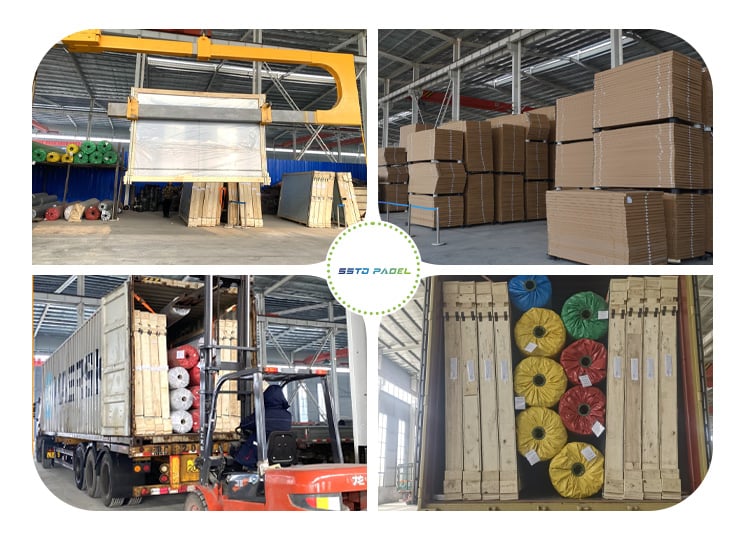
Inspect a Padel Court twice: before shipment, compare the equipment and packing with the approved order; on arrival, record the delivery condition and check the goods against the final packing list. Keep both records linked to the same order and package numbers. A factory photo and a signed delivery receipt answer different questions, and neither replaces a component check.
For an importer, contractor or club owner, this is the point where a missing hardware carton or a damaged glass package can interrupt installation. The receiving team needs to know what to check, what to photograph and whom to contact before the truck arrives.
Our guide to importing Padel Courts from China treats pre-shipment review, arrival inspection and completed-site acceptance as separate steps.[2] This article gives buyers a working inspection framework. The agreed specification and contract determine the checks and acceptance criteria for each order.
Set the Padel Court inspection requirements before packing
An inspection needs a reference. Use the approved quotation or purchase order, the current drawing revision and the agreed component list. Add the specified finish, colours, lighting configuration, accessories and packing requirements where they apply.
A model name alone is not enough. Two orders for the same court design may have different branding, door arrangements or accessories. Browse the SSTD Padel Court range to identify the model, then use the order documents to define the actual supply.
Before inspection, agree:
- Who will inspect: the supplier, the buyer's representative or an independent inspection company.
- Which quantities and characteristics will be checked, including any sampling approach and its limits.
- Which measurements, tests or supporting documents are required, and the acceptance criteria that apply.
- What must be inspected before wrapping or closing crates, and who reviews unresolved issues before shipment.
Not every inspection covers factory assembly, destructive testing or a certification review. The SSTD-003-6 product page lists steel-structure inspection and a pre-shipment quality check; the detailed protocol for your order is agreed separately.[1]
Use a simple issue list with an item reference, observation, evidence and agreed action. Keep shipment authorization separate from the technical inspection result, and follow the approval and payment terms in the contract.
What to check before the court leaves the factory
Inspect accessible components before protective packaging hides them. Where a check is based on a sample, the report should identify what was examined rather than implying that every component passed.
|
Inspection area |
Check against the approved order |
Record to retain |
|
Model and configuration |
Court quantity, drawing revision, door layout, colours and ordered options |
Order reference and identified overview photos |
|
Steel frame and connections |
Component identification, agreed dimensions and connection locations; visible deformation or damage |
Measurement results where specified, with component references |
|
Welded areas and finish |
Required inspection results, visible concerns and the specified finish; status of corrections |
Inspection findings and documented corrective action |
|
Glass and fittings |
Panel references, quantities, specified dimensions and processing; visible edge or surface damage on safely accessible panels |
Panel schedule, available traceable documents and identified photos |
|
Mesh and doors |
Panel types, quantities, door components and associated fittings |
Component checklist linked to package numbers |
|
Turf and net equipment |
Product references, colours, quantities and included installation accessories |
Labels and itemised quantities |
|
Lighting and hardware |
Light and bracket references, electrical ratings against the order, and the listed fastener types and quantities |
Product labels, agreed test records and hardware list |
|
Packing and documents |
Contents, package marks and packing arrangement match the final packing list |
Final packing list and package photos |
These are checks to agree for the purchase, not a fixed test specification for every order. Use the selected-model documents and project requirements for numerical tolerances, glass criteria, coating measurements or specialist testing.
Photos identify visible condition. They cannot establish hidden weld quality, glass compliance, coating performance or structural suitability on their own. If the project requires a particular test or certificate, request the applicable document and check its scope against the supplied product.
Close discrepancies with evidence
If an inspector finds an incorrect bracket or finish damage, record the affected component and the action agreed with the supplier. After correction, retain a follow-up result tied to the original issue. A message saying "all fixed" is difficult to use if the receiving team cannot identify what changed.
Distinguish items corrected before shipment from exceptions accepted in writing or items held for further review. Agree the disposition of any unresolved issue through the contract's approval process rather than leaving the installer to discover it later.
Connect packing and loading records to the goods
Standard SSTD packing gives tempered glass, lighting and frame parts their own protective packages.[1] Confirm the arrangement for the selected order and transport route, because packing method describes how the goods are protected, not what a particular shipment contains.
The final packing list should let the receiving team connect a package to its contents. Ask for package marks, component descriptions, quantities and handling information, including weights where needed for unloading. For several courts, identify court-specific parts and any shared cartons.
Before packages close, retain photos of their contents and labels. After packing, record the outside condition. Keep small hardware cartons identifiable; a total package count is of limited use if nobody knows which package contains the glass fittings.
For a container shipment, agree loading records that show identifiable packages and their arrangement, together with the container number and seal record where applicable. Record the seal after closure if it forms part of the agreed process. A matching seal helps trace the shipment; it does not prove that every item inside is correct or undamaged.
Keep the final packing list, inspection report, loading records and transport documents together. For groupage or consolidated shipments, use the handling and shipment references available for that service rather than expecting an exclusive container or seal.
Prepare the receiving team before delivery
Assign someone to record the receipt and someone competent to manage unloading. Give them the packing list, package weights and applicable handling instructions in advance. Arrange suitable equipment and a secure storage area, particularly if installation will not begin immediately. Our import guide recommends planning access, unloading equipment and storage before arrival.[2]
Do not improvise glass-crate lifting or open an unstable package to obtain a photograph. Trained handlers should follow the supplier's instructions and the site lifting plan. If cargo has shifted, a crate is unstable or broken glass is suspected, keep people clear and arrange a safe assessment before continuing.
Also prepare the contact route for the supplier, freight forwarder, carrier and cargo insurer where applicable. Find the relevant notice and claim requirements before delivery, not after a problem occurs.
How to inspect a Padel Court on arrival
1. Record the delivery condition before it changes
At the handover point, photograph the shipment reference, accessible package labels and visible condition before unloading or opening changes the evidence. For an applicable container delivery, record the container number and seal condition. If a seal has been changed during an authorised inspection or other handling, retain the available record; a difference alone does not establish the cause of a loss.
Note visible damage, wet packaging or missing packages on the relevant delivery record using the carrier's procedure. Ask the driver or representative to acknowledge the observations where possible. Keep your own dated record if acknowledgment is unavailable.
Be specific. "Crate G-02: lower corner crushed" is more useful than "goods damaged." Do not describe unopened contents as fully inspected. A receipt notation supports the factual record; it does not by itself settle liability.
2. Reconcile the package count, then the contents
Compare delivered package marks with the final packing list. Record an unlocated carton as a discrepancy requiring investigation, and check for split deliveries or shared packages before concluding that its contents were never shipped.
When trained personnel can open packages safely, compare the contents with the component list. Record quantities actually checked, items not yet accessible and any visible defects. Receiving every listed crate does not mean the contents are complete.
Use the pre-shipment checklist again, but focus on arrival condition and identification. Check accessible glass for visible damage, steel parts for deformation or finish damage, and cartons for signs of impact or moisture. Verify turf, lights, fittings and hardware against the supplied list. Leave electrical testing to qualified personnel; do not energise wet or damaged equipment as a receiving check.
3. Keep questionable parts out of installation
Label and segregate affected components without creating an unsafe storage condition. Retain package marks so the supplier can connect the issue to a drawing or part reference. Do not drill, grind, straighten or repair a questionable component simply to keep assembly moving. Obtain the technical assessment and written disposition first.
A receiving record can distinguish "checked with no visible discrepancy," "not yet checked" and "held for review." This is more informative than one pass/fail box covering an entire shipment.
Record a discrepancy so someone can act on it
Take an overview showing the package identity, a closer view of the affected area and any detail needed to explain the observation. Preserve original files and link them to the receiving record. Photograph related packaging before disposal.
Maersk's Ground Freight guidance, for example, requests shipment details, damage photos, outer-packaging photos and the delivery receipt with damage notations.[3] Its Value Protect guide also lists the commercial invoice, packing list and photographs of cargo damage or condition at the time of destuffing among claim documents.[6] These are service-specific examples, not the procedure for every shipment.
The following entries are illustrations, not records of an SSTD shipment or standard package quantities.
|
Package / item |
Observed fact |
Evidence reference |
Recorded next action |
|
G-02 / accessible glass panel |
Visible edge damage on one accessible panel; remaining panels not yet checked |
G-02-label.jpg; G-02-edge.jpg; receiving note |
Keep affected material out of installation and request assessment |
|
H-01 / hardware carton |
Carton listed on packing list not located at the first tally |
Packing-list reference; tally sheet; unloading photos |
Check shared packages and split-delivery records; notify supplier |
|
S-03 / frame component |
Coating scraped near a connection area; suitability not assessed |
S-03-overview.jpg; S-03-detail.jpg |
Identify the component and request an approved disposition before use |
Describe what is visible without assigning a cause you cannot establish. A crushed corner, wet wrapper or scratched coating is an observation. Whether it resulted from packing, transport, unloading or later handling requires further evidence.
Report damage promptly and separate the responsibilities
Send the first written notification through the required channels as soon as an issue is discovered. Include the order and shipment references, delivery date and location, affected package or component, observed quantity, photos and immediate protective action. Notify the carrier or insurer as required; a message to the supplier does not replace their separate procedures.
Reporting damage and submitting a formal claim are different steps. Maersk's Ground Freight guidance makes this distinction and states that the time limits depend on the specific contract terms.[3] Check the actual transport contract, insurance policy and applicable requirements immediately. Do not adopt a generic 24-hour, 48-hour or other deadline from an unrelated shipment.
Preserve damaged goods and relevant packaging safely for assessment, while preventing further loss. Seek instructions before non-emergency repair, disposal or return. If immediate action is necessary for safety, document what was done and why. Keep related cost records without assuming that every expense will be recoverable.
The agreed Incoterm allocates delivery responsibilities and transit risk, but it is not a substitute for the sales contract's quality and payment terms.[4] Paying freight to a destination does not necessarily mean bearing risk until arrival: under CIF, for example, risk normally transfers when the goods are loaded on board at the shipment port.[5]
Keep the product-conformity question separate from the transport-damage question. Replacement, repair, costs and any insurance recovery are assessed under the relevant contracts and the documented evidence.
Receiving inspection is not final site acceptance
After receiving discrepancies have been addressed, the installer still needs to check the completed court against the project documents. Foundation and anchoring, assembly, glass fittings, doors, turf, net and electrical work belong to site installation and acceptance, not merely the delivery count.[2]
Keep the receiving record with the installation handover documents. Identify any outstanding issue and obtain the appropriate technical clearance before the affected part is used. A complete delivery can still require installation checks before the court is ready for players.
FAQ
Can photos or a video call replace an inspection visit?
They can support an agreed remote review of visible items. The record should identify what was shown and what could not be checked. Use an in-person or specialist inspection when the required measurements, access or tests cannot be completed remotely.
Should buyers arrange an independent pre-shipment inspection?
Consider it when the order value, project requirements or the buyer's own verification needs justify it. Agree access, timing, scope, sampling and reporting before packing. An independent report covers the work actually performed; it is not a guarantee against every defect or transit issue.
Do we still need arrival checks after a pre-shipment inspection?
Yes. Pre-shipment records describe the checks made before dispatch. Arrival inspection records what was delivered and its visible condition after transport. Compare the two using the same package and component references.
What if damage appears only after opening a crate?
Stop using the affected component, record the discovery and photograph the item and relevant packaging safely. Notify the required parties promptly under the applicable procedures, even if no external damage was recorded at delivery. Retain the evidence and check the concealed-damage requirements for that shipment.
What happens if glass arrives damaged?
Identify the affected panel and photograph it with its crate and packing before anything is moved. Then send us the order number, package mark and photos. SSTD reviews the documented condition and arranges replacement parts for components damaged in transit under the terms agreed for that order; glass is the most frequently replaced item. If a carrier or insurer is involved, report to them in parallel, because their procedure and deadlines run separately from ours.
Can we begin installation while a shortage is being investigated?
Ask the installer and supplier which work, if any, can proceed without the affected item. Do not substitute unapproved hardware or install damaged components. Record any agreed partial-release decision so the site team knows what remains on hold.
Discuss inspection and delivery requirements with SSTD
Tell us your country and city, the number of courts and whether the site is indoors or outdoors. Share a preferred model or reference image if you have one, and mention any independent inspection or receiving-document requirements.
We can discuss the selected configuration and the packing, document and inspection requirements to include in the order. You can review the Padel Court product range, browse the SSTD Cases section, or contact us about your Padel Court project.
Sources
[1] https://www.sstdsports.com/logo-plate-360-panoramic-padel-court — SSTD-003-6: manufacturing, inspection and packing description
[2] https://www.sstdsports.com/blog/how-to-import-padel-courts-from-china — SSTD: How to Import Padel Courts from China
[3] https://www.maersk.com/support/faqs/ground-freight-claims-process — Maersk Ground Freight: damage reporting and claims (service-specific)
[4] https://academy.iccwbo.org/incoterms/article/incoterms-2020-new-rules-old-problems — ICC Academy: Incoterms and sales-contract scope
[5] https://academy.iccwbo.org/incoterms/article/incoterms-2020-cip-or-cif — ICC Academy: CIF and CIP risk transfer
[6] https://www.maersk.com/~/media_sc9/maersk/solutions/transportation-services/value-protect/value-protect-claims-guide.pdf — Maersk Value Protect: claims guide (service-specific)
Table of Contents
- Set the Padel Court inspection requirements before packing
- What to check before the court leaves the factory
- Connect packing and loading records to the goods
- Prepare the receiving team before delivery
- How to inspect a Padel Court on arrival
- Record a discrepancy so someone can act on it
- Report damage promptly and separate the responsibilities
- Receiving inspection is not final site acceptance
-
FAQ
- Can photos or a video call replace an inspection visit?
- Should buyers arrange an independent pre-shipment inspection?
- Do we still need arrival checks after a pre-shipment inspection?
- What if damage appears only after opening a crate?
- What happens if glass arrives damaged?
- Can we begin installation while a shortage is being investigated?
- Discuss inspection and delivery requirements with SSTD
- Sources