 EN

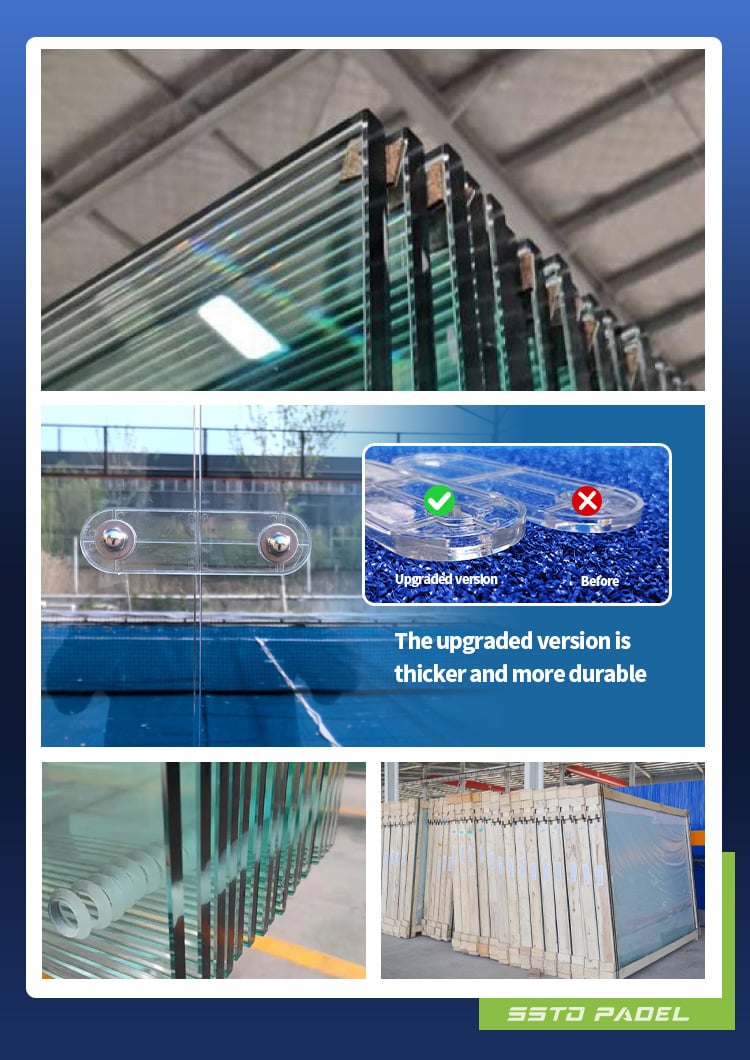
The glass and steel frame are two of the most important parts of a Padel Court quotation. They affect the enclosure, playing experience, installation work, transport risk and future maintenance. They should therefore be selected as one coordinated system, not as two isolated materials.
For a buyer, the safest approach is not to choose a glass thickness or steel grade from a generic online table. The selected court model, panel layout, fixing method, environment and applicable local requirements all matter. Ask the supplier to identify the materials and interfaces for the exact configuration in the quotation and technical documents.
SSTD's existing buyer guidance separates the equipment package from destination-specific foundation, unloading, installation and electrical work. That same discipline applies to materials: the quotation should say what is supplied, how it is documented and which site responsibilities remain local. This guide explains which specifications and documents to compare before approving an order.
Start with the complete glass-and-frame system
A Padel Court enclosure is more than a list of glass panels and metal posts. The buying decision includes the relationship between:
- tempered-glass panels and their support points;
- steel posts, beams, doors and connection parts;
- mesh or other enclosure components in the approved configuration;
- anchors and the foundation interface;
- protective finishes and the project environment;
- handling, packing and installation instructions;
- the court layout, access doors and lighting arrangement.
A supplier can provide a material name without giving enough information to assess the system. A useful quotation links the material description to the model, quantity, drawings, packing list and installation information. If the buyer changes the court layout after the quotation, the glass arrangement, frame members and fixing details may also need to be reviewed.
What to check when comparing tempered glass
1. Confirm that the glass is part of the selected court configuration
Do not assume that every Padel Court uses the same panel arrangement. Panoramic and classic configurations can differ in structural layout, enclosure arrangement and fixing positions. The glass quantity, panel locations and support details should be tied to the model reference shown on the quotation.
Ask for:
- the model name or reference;
- a glass-panel schedule or bill of materials;
- the applicable layout or installation drawing;
- the panel dimensions and quantity for that model;
- the fixing and support method;
- packing and handling information;
- the inspection and replacement process for damaged panels.
The purpose is not to force every supplier into one standard specification. It is to make sure the material offered matches the court that the buyer is actually purchasing.
2. Verify the safety and compliance basis
The word "tempered" alone is not a complete procurement specification. The buyer should ask which product standard, test documentation or local requirement the supplied glass is intended to meet. The required basis may depend on the destination, project type and applicable building or sports-facility rules.
Request the supplier's available technical documentation during model confirmation. Then have the local engineer, contractor or project authority review it where required. Do not accept a certification claim unless the exact product and document have been verified.
A quotation should also explain how glass is protected during packing, loading, unloading and assembly. Tempered glass has been processed for safety, but it still requires controlled handling. The receiving team should inspect packaging and panels, photograph visible damage and keep package numbers before installation.
3. Check the interface, not only the panel
A panel can be correctly described and still be unsuitable for a project if its supports, gaps, fixings or surrounding frame are not compatible. Ask how the glass connects to the structure and what tolerances or site conditions the installation documents address.
The review should cover:
- support locations and fixing hardware;
- panel alignment with posts and beams;
- door and corner interfaces;
- edge protection and contact points;
- access for installation and later inspection;
- the relationship between the glass and the finished foundation level.
These details are normally model-specific. They belong in the technical confirmation for the selected court, rather than in a generic specification.
What to check when comparing steel frames
1. Identify every structural component in the scope
"Steel frame" can describe a large group of parts. The quotation should distinguish the main posts and beams from doors, mesh supports, brackets, connection plates, anchors and other hardware. Buyers should compare the bill of materials rather than comparing one broad material label.
Ask the supplier to identify:
- the main frame members;
- secondary supports for glass and mesh;
- door frames and hardware;
- connection and fastening parts;
- foundation anchors or fixing interfaces;
- any roof, canopy or lighting supports included in the selected scope.
This makes it easier to compare quotations and prevents accessories from being treated as assumed inclusions.
2. Ask for the material and finish description supplied for the model
Steel performance depends on the complete part and finish, not just the word "steel." The buyer should request the material description, surface treatment or coating information, colour options and maintenance instructions that apply to the chosen model.
Do not insert an unconfirmed steel grade, coating thickness, corrosion class or service life into the purchase order. If the destination is coastal, humid, industrial or otherwise demanding, state that environment in the inquiry and ask the supplier to recommend the applicable finish and document it in the quotation.
The buyer should also check whether a finish is applied to all relevant frame parts or only to selected visible members. The answer may affect the frame, doors, brackets and replacement parts differently.
3. Review geometry and foundation interfaces
A strong frame is not enough if the foundation or anchor layout does not match it. The selected model's foundation drawing and installation information should be reviewed before concrete work begins. The local engineer or contractor should check finished levels, anchor positions, drainage, existing slab conditions and surrounding access.
Do not use one generic anchor layout for every Padel Court. If the model, door arrangement, roof or other configuration changes, ask whether the foundation and structural documents must be updated.
4. Consider the environment and maintenance access
Outdoor courts face exposure that indoor projects may not. The inquiry should identify the location, indoor or outdoor use, proximity to the coast, local weather conditions and any roof or canopy. These facts help the supplier and local technical team discuss the appropriate frame finish and site details.
Maintenance access matters too. Operators need to inspect visible connections, doors, mesh, glass interfaces and areas where dirt or water can collect. Ask for the cleaning and maintenance information supplied with the selected model, and make sure replacement parts can be identified by model and component.
Glass and steel must be specified together
A common purchasing mistake is to compare glass in one spreadsheet and steel in another. The court is assembled as one enclosure, so the buyer should review the interfaces together.
|
Procurement question |
Why it matters |
What to request |
|
Which court model is quoted? |
Layout and component quantities can vary by configuration. |
Model reference, drawing and bill of materials |
|
Where is each glass panel supported? |
Support positions affect fit, handling and installation. |
Panel schedule and fixing/interface details |
|
Which steel parts are included? |
A broad frame label may omit doors, brackets or anchors. |
Itemised component list |
|
What finish applies to the frame? |
Environment and maintenance requirements differ by project. |
Material, finish and care information for the model |
|
How is the foundation interface defined? |
Incorrect anchors or levels can stop assembly. |
Applicable foundation and installation documents |
|
What happens if a panel is damaged? |
Glass damage affects delivery records and replacement planning. |
Packing, inspection and replacement process |
|
Who installs and inspects the system? |
Supplier support and local work are separate scopes. |
Responsibility matrix in the quotation |
A complete answer is more useful than a single headline material claim. The quotation should make the buyer's next review possible without guessing.
How project conditions change the selection review
Indoor and outdoor projects
Indoor courts may have different exposure and access conditions from outdoor courts, but the same model documentation still applies. Outdoor projects should provide the destination and site environment early, because the frame finish, drainage, access and maintenance discussion may depend on it.
Coastal or humid locations
A coastal or humid site deserves a specific material and finish review. Do not assume that a standard finish is suitable, and do not promise a corrosion rating without documentation for the selected product. Put the environment in the inquiry so the supplier can respond against the actual project.
Roofed or covered courts
A roof or canopy can introduce additional structure, foundations, drainage, access and electrical considerations. It may also change how frame members and supports are arranged. Include the roof requirement in the first request for quotation and ask for the documents that match the complete configuration.
Multi-court projects
For several courts, request a combined bill of materials and packing plan. Confirm whether each court uses the same model and finish, and ask how components are identified by court during receiving. A clear package and labeling plan reduces mixing parts between courts.
What a buyer should request before placing an order
Send the supplier enough information to quote the right system, without waiting until every technical issue has been solved. A practical first inquiry includes:
- country, city and delivery destination;
- number of courts and preferred model, if known;
- indoor or outdoor installation;
- site dimensions, photos and access information;
- coastal, humid or other environmental conditions;
- roof, canopy, lighting or branding requirements;
- preferred installation arrangement;
- requested delivery scope and responsible parties;
- any local documentation or approval requirements;
- expected inspection and handover records.
The supplier can then identify the applicable glass and frame documents. The local engineer or contractor should review the selected information against the site and jurisdiction before construction or assembly.
Red flags in a glass and steel quotation
Review the quotation carefully if it:
- names a material but gives no model or component reference;
- shows a glass quantity without a panel schedule or layout;
- uses one generic foundation drawing for different configurations;
- lists a frame without doors, brackets, anchors or connection parts;
- makes certification or performance claims without a document;
- promises a finish or corrosion result without identifying the product basis;
- treats delivery, unloading, installation and electrical work as one unclear line;
- provides no process for recording damage or shortages on arrival.
These are not proof that the product is unsuitable. They are reasons to request clearer documentation before comparing prices or approving production.
FAQ
Is thicker glass always better for a Padel Court?
Not necessarily. Glass must match the selected court design, support arrangement, safety basis and applicable project requirements. Ask for the model-specific panel schedule and documentation instead of selecting by thickness alone.
What type of steel should I choose for a Padel Court frame?
Choose a frame that is documented for the selected model, environment and configuration. Ask for the material and finish information for the supplied components. Do not add an unconfirmed steel grade or coating claim to the order.
Should I buy glass and frames from the same supplier?
Buying a coordinated system can make model compatibility, drawings, packing and installation support easier to manage. If components come from different suppliers, the buyer must control the design responsibility, interfaces, tolerances and warranty or after-sales boundaries in writing.
How do I compare two supplier quotations?
Compare the model, bill of materials, glass panel schedule, frame components, finish information, drawings, packing scope, installation responsibility and inspection records. Only then compare the price and delivery scope. A lower line-item price may exclude components or site services.
Does the glass and steel price include installation?
Not automatically. Equipment, freight, unloading, foundation, local installation and electrical work should be separated in the quotation. Confirm which services SSTD is asked to arrange and which remain local.
What should I do if glass arrives damaged?
Keep the packaging, record the package number, photograph the damage and compare the shipment with the packing list before installation. Notify the relevant supplier, carrier or insurer promptly and retain the receiving record.
Can the same frame specification be used for every Padel Court model?
Do not assume that. Model, enclosure layout, doors, roof requirements and foundation interfaces can change the applicable components. Request the documents for the selected model and configuration.
Request a model-specific glass and steel review
Send SSTD your country and city, number of courts, preferred model or reference image, site photos and dimensions, indoor or outdoor conditions, roof requirements, access information and installation arrangement. Ask for the model-specific bill of materials, glass and frame description, applicable drawings, packing information and quotation scope.
Review the documents with your local engineer or contractor before foundation work or assembly. The SSTD Padel Court range provides the starting point for model discussion. You can also review SSTD project cases, contact the team through the SSTD contact page, and read the related guides on Padel Court foundation requirements, the Padel Court installation process, and importing Padel Courts from China.
Sources
[1] SSTD, Padel Court product range.
[2] SSTD, What Foundation Does a Padel Court Need? A Practical Guide for Buyers.
[3] SSTD, Padel Court Installation Process: From Foundation Preparation to Final Inspection.
[4] SSTD, How to Import Padel Courts from China: A Step-by-Step Guide.
[5] SSTD, Standard Panoramic Padel Court. This retained model-page link supports the model discussion; it is not evidence of a particular glass thickness, steel grade or certification.
This article is a procurement guide. Final material selection, structural interfaces, foundation, installation, safety and acceptance work must follow the selected model documents, the actual site and the requirements of the applicable jurisdiction.
Table of Contents
- Start with the complete glass-and-frame system
- What to check when comparing tempered glass
- What to check when comparing steel frames
- Glass and steel must be specified together
- How project conditions change the selection review
- What a buyer should request before placing an order
- Red flags in a glass and steel quotation
-
FAQ
- Is thicker glass always better for a Padel Court?
- What type of steel should I choose for a Padel Court frame?
- Should I buy glass and frames from the same supplier?
- How do I compare two supplier quotations?
- Does the glass and steel price include installation?
- What should I do if glass arrives damaged?
- Can the same frame specification be used for every Padel Court model?
- Request a model-specific glass and steel review
- Sources